

Rated as local experts, with top ratings
Read the reviews yourself on each public profile.


Get a cash offer for your house
We’ll come see it
When the calendar is the problem, the first step is the dates on your letters. Here’s how a sale before the auction works.
Tell us where things stand
We go through the dates on your letters with you. Tell us what the lender has sent.
Tell us about your house →We see the house
We come see the house and walk it with you. By the end of the appointment, you will have a verbal, ballpark offer. If the offer seems reasonable, then the final number and terms will be decided on mutually, and both sides will enter into a purchase agreement.
Pick your date, get paid
Sign when it works for you. Close next week or months out. Take what you want and leave the rest.
A team you can talk to about your house, from the first call to closing
An Oregon team with years of experience and an A+ from the BBB. Since 2018, we’ve helped homeowners across Oregon and Washington sell houses in every kind of situation.
Owner and founder of Better Off Home Buyers
Since 2018 buying houses in Oregon & Washington
★★★★★Google reviews
What sellers say about working with us.
“I sold my house in Portland to Better Off Home Buyers and they were wonderful to work with. They covered my mortgage payments for over a year when due to the pandemic I wasn’t receiving a rent payments, and there were unauthorized people living in the house who wouldn’t let us inside which prevented a normal sale. Had they not done that, I would have lost the house, I would have walked away. They were really fair and great to work with, and I’m really excited to be done with the whole ordeal and walk away.”
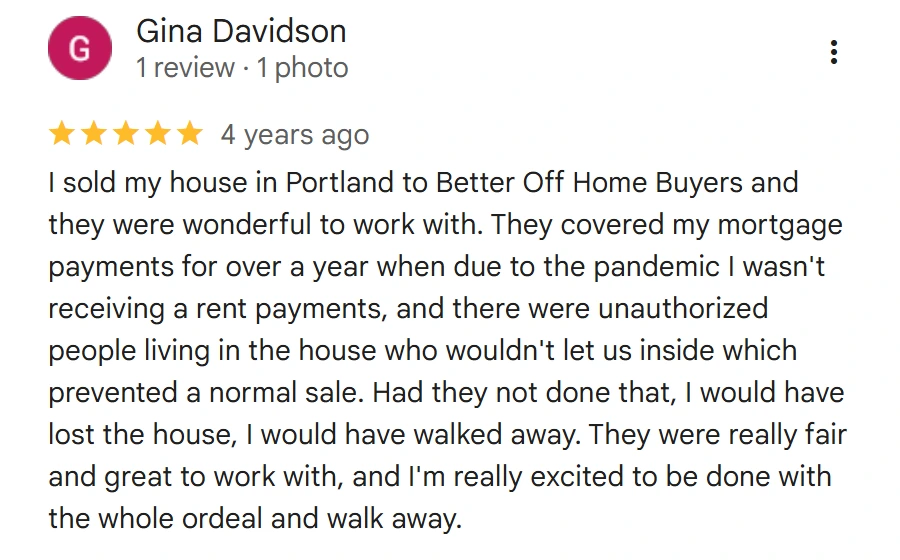 Original review on Google
Gina D.
Read the full review on Google →“Better Off Home Buyers turned an impossible situation into something doable. We very much appreciate everything they did to help us and through a very difficult endeavor, that had completely overwhelmed us. They were professional, respectful, and had ongoing communication. They did a great job.”
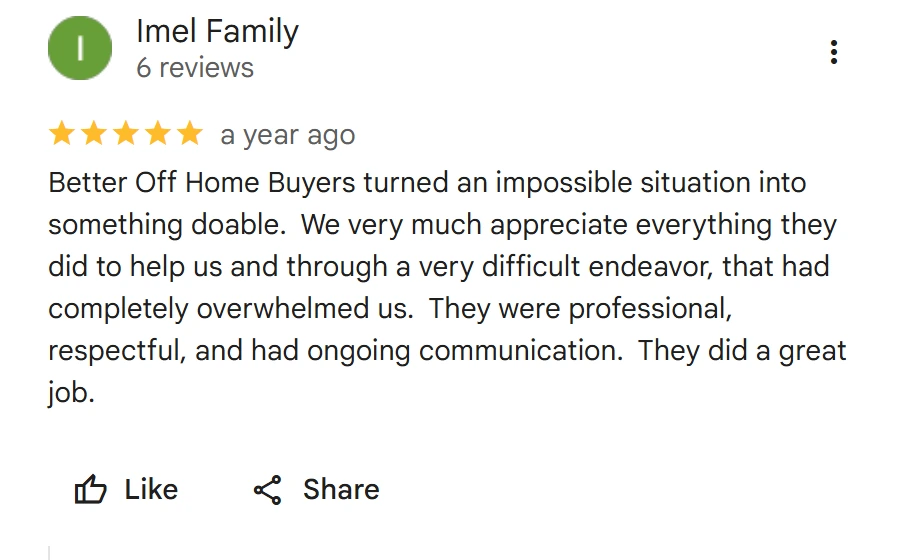 Original review on Google
Imel Family
Read the full review on Google →Where are you in the foreclosure process?
Each stage has its own choices. Find yours and the next step that fits it.
| Where you are | What it usually means | Best next step |
|---|---|---|
| You missed a payment, or a few | This is usually the stage with the most choices. Lenders often reach out first and may talk about a repayment plan. | Call your lender and ask what help it offers. You can also ask us for an offer, so you have a second number to compare. |
| You received a notice of default or a letter about starting foreclosure | The lender has started the formal process. The letters list the dates that apply to your loan. | Read every date. Talk to a foreclosure attorney or a HUD-approved housing counselor, and ask your lender for a payoff statement. |
| A sale date (auction) is set | The calendar is the main factor now. A sale needs time for the title work, the paperwork and the signatures. | Call us as soon as you have the date. We tell you straight whether the calendar allows a sale, and an attorney confirms your other options. |
| The auction already took place | Ownership has usually changed, so the questions turn to the move-out date and any surplus funds. | Talk to an Oregon attorney about your rights. A sale to us takes place before the auction. |
| You are behind on property taxes | Back taxes are a lien on the house, and the county follows its own timeline. | Ask the county tax office for the exact amount owed. It is normally paid from the proceeds at closing. |
How foreclosure works in Oregon, from the first missed payment to the auction
A foreclosure is the process a lender uses to collect on a loan when payments stop. It rarely happens overnight. It moves in stages, and each stage usually comes with a letter that lists dates. Many homeowners find that reading those letters closely, and asking questions early, opens up more choices.
In Oregon, a lender can foreclose a home loan in two ways. Most home loans are secured by a trust deed, which lets the lender sell the house through a trustee without going to court. That is non-judicial foreclosure. The lender can also go to court, the way a mortgage is foreclosed, which is judicial foreclosure. In a trustee’s sale, the lender records a notice of default and gives notice of the sale at least 120 days before the sale date, and until five days before that date you can stop the sale by paying what is past due plus the costs and fees. The letters you receive show which kind of foreclosure applies to your loan and which dates matter. A foreclosure attorney or a HUD-approved housing counselor can tell you which dates apply to you and which state programs apply to your loan.
The stages in order
These are the stages homeowners commonly describe. Your lender’s letters show the exact sequence for your loan.
- A payment is missed. The lender usually sends reminders and may add late fees. Many lenders will talk about catching up at this point.
- The lender explains its options. These can include a repayment plan, forbearance or a loan modification. Ask for the details in writing.
- A notice of default or a similar formal notice arrives. The formal process has started, and the notice lists what is owed and the dates that follow.
- A window to catch up may be offered. Some loans allow the borrower to bring the loan current by paying the full past-due amount before a deadline. The notice states whether yours does.
- A sale date is set. The auction date is listed in the notices. A sale before that date needs enough time for the title company to finish its work.
- The auction takes place. After the sale, ownership changes, and the questions become the move-out date and any money left after the lender is paid.
Selling before the sale date is one of several options, and the calendar decides whether it is available to you. The next section compares them.
Your options, and how to check any offer
Most homeowners ask two things first. Am I still in time? Who can I trust? The options below show what each path asks of you.
Work with your lender
A repayment plan, forbearance or a loan modification can fit when income has recovered or will soon. Your lender explains what it offers, and a HUD-approved housing counselor can help you ask for it, usually at no charge.
Short sale
A short sale applies when the loan balance is higher than what the house can sell for. The lender has to approve it, which takes time and paperwork. An attorney or counselor can tell you whether it fits.
Deed in lieu of foreclosure
You give the house back to the lender in exchange for ending the loan. The lender decides whether to accept it, and an attorney reviews the terms, including what it means for any remaining balance.
Sell before the auction
A sale lets the title company pay your lender from the proceeds at closing, and you receive what is left. It can protect your equity, and the loan is settled by the sale. It works when the calendar leaves enough time for the closing.
Bankruptcy
Some homeowners explore bankruptcy to pause a foreclosure while they reorganize their debts. It is a legal decision with long-term effects, so talk to a bankruptcy attorney before you choose.
Check any buyer before you sign
Ask who you are dealing with, read every page, and hold off on signing a deed or paying an upfront fee. Close at a title company, and ask an attorney or counselor for a second look. You can meet our team and read seller stories before you call.
Want to see how a cash sale lines up with the other paths? Our comparison page sets them side by side. Call us with your dates and we tell you straight whether a sale makes sense, whether or not it ends with us.

Checked us out? Let’s talk about your house
Share your dates and we call you back with a straight answer on what the calendar allows. Selling is your choice.
We buy houses in any condition and in any situation, across Oregon and Washington.
Situations we talk with homeowners about
Every foreclosure story has its own mix. Here is what we see most.
Behind on the mortgage
Job loss, a medical bill, a change in the family. Payments slipped and the letters started. You can talk to us at any stage, and we look at the timing with you.
A notice of default or a sale date
The dates on the letters decide how much room there is. Share them with us and we say whether a sale fits. An attorney confirms the rest.
Back property taxes
Unpaid taxes sit on the house like a lien and are normally paid from the proceeds at closing. Ask the county for the current amount.
A house that needs repairs
Repairs cost money you may not have right now. We buy houses as they are, so the sale does not wait on a contractor. See selling as-is.
selling as-isSomeone living in the house
A tenant, a relative or an occupant can slow a traditional sale. Tell us who lives there and we explain the options.
Equity you want to protect
If the house is worth more than the loan, a sale before the auction can put the difference in your hands. The title company pays what is owed and you receive the rest.
Questions about selling a house to avoid foreclosure
Straight answers to what homeowners ask us most when the lender has started the process.
Am I still in time to sell my house before foreclosure?
Often, when the sale date has not passed. How much time you have depends on your loan, your lender and where the process stands, and the dates are in the notices you received. A sale needs time for the paperwork and the title company, so the earlier you start, the more choices you have. Share your dates with us and we tell you straight whether the calendar allows a sale. A foreclosure attorney confirms which dates apply.
Who comes to see the house, and how does the offer work?
We visit, talk through what you need and walk the property, and a cash offer follows. When the number and terms work for both sides, we sign a purchase agreement and close at a title company, with a notary coming to you if that is easier.
Is this a scam?
Foreclosure brings out scams, so checking is wise. Ask who is buying and read every page. Hold off on signing a deed or paying an upfront fee, and close at a title company. Better Off Home Buyers is a local team in Portland, founded in 2018. You can meet the people who work with you, read seller stories, and see the offer before you decide. The offer is yours to accept or decline.
What will I have left after the payoff?
The offer, minus your mortgage payoff and anything else owed on the house, such as back taxes or liens. The title company pays those at closing and you receive what is left. Ask your lender for a payoff statement early, because late fees and legal costs can change the balance. We go over the numbers with you at the start.
How do you decide what to offer?
The offer is built around your calendar. We start with the value after repairs, subtract what those repairs cost, and aim for a number that nets you as much as possible while the sale closes before the auction date. Our team includes Robert Laird, a Realtor and general contractor, who helps us estimate the value. Every number is explained, and a written copy is yours on request. See how a cash sale compares with listing.
Does selling before the auction help my credit?
A sale that pays your loan in full settles the loan, while a foreclosure can remain on a credit report for years. How your lender reports the account can vary, so ask the lender and a HUD-approved housing counselor what to expect in your case.
Can I sell if I owe more than the house is worth?
That is a short sale, and your lender has to agree to accept less than it is owed. It takes time and paperwork, and an attorney or housing counselor can tell you whether it fits. Call us with your numbers and we say honestly whether we can help. If the house is worth less than what is owed, we tell you plainly that we cannot help with the sale.
What if I am behind on property taxes?
Back property taxes are normally paid from the sale proceeds at closing, like any other lien. The county follows its own timeline, so ask the county tax office for the exact amount and the dates.
Can you buy a house that needs repairs or has someone living in it?
Yes, in many cases. We buy houses as they are, and a tenant or an occupant does not stop us from looking. Tell us what the house needs and who lives there, and we explain the options. For a tenant, a landlord attorney confirms which notices apply.
Guides and pages for a house in foreclosure
Read more when you want the detail.
Selling your house as-is
Sell the house as it stands, with the repairs it needs.
Cash sale vs agent
A side-by-side look at the two paths.
Houses we buy in any situation
Every situation we handle, in one place.
We buy houses in Oregon
Where we buy across the state.
How to sell a house in Portland, Oregon
Our guide to the steps and the timeline.
Deed in lieu of foreclosure in Oregon
How it works and what else you can do.
Ready to talk about your dates and your house?
Tell us where things stand. We will listen, look at the house and give you a straight answer, whether or not it ends in a sale.
Call (888) 827-0889We buy houses across Oregon and Washington. This page is general information and not legal or tax advice.
We buy houses across Oregon and Washington
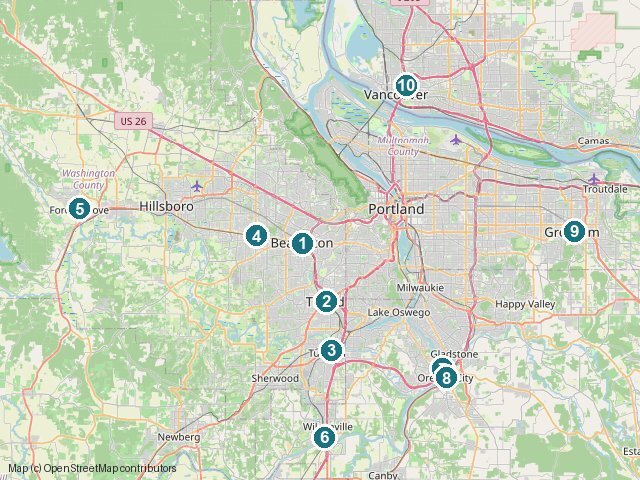
We buy houses facing foreclosure from homeowners across Oregon.
See every area we cover on we buy houses in Oregon and we buy houses in Washington.